Knight Of Your Heart - Mp3
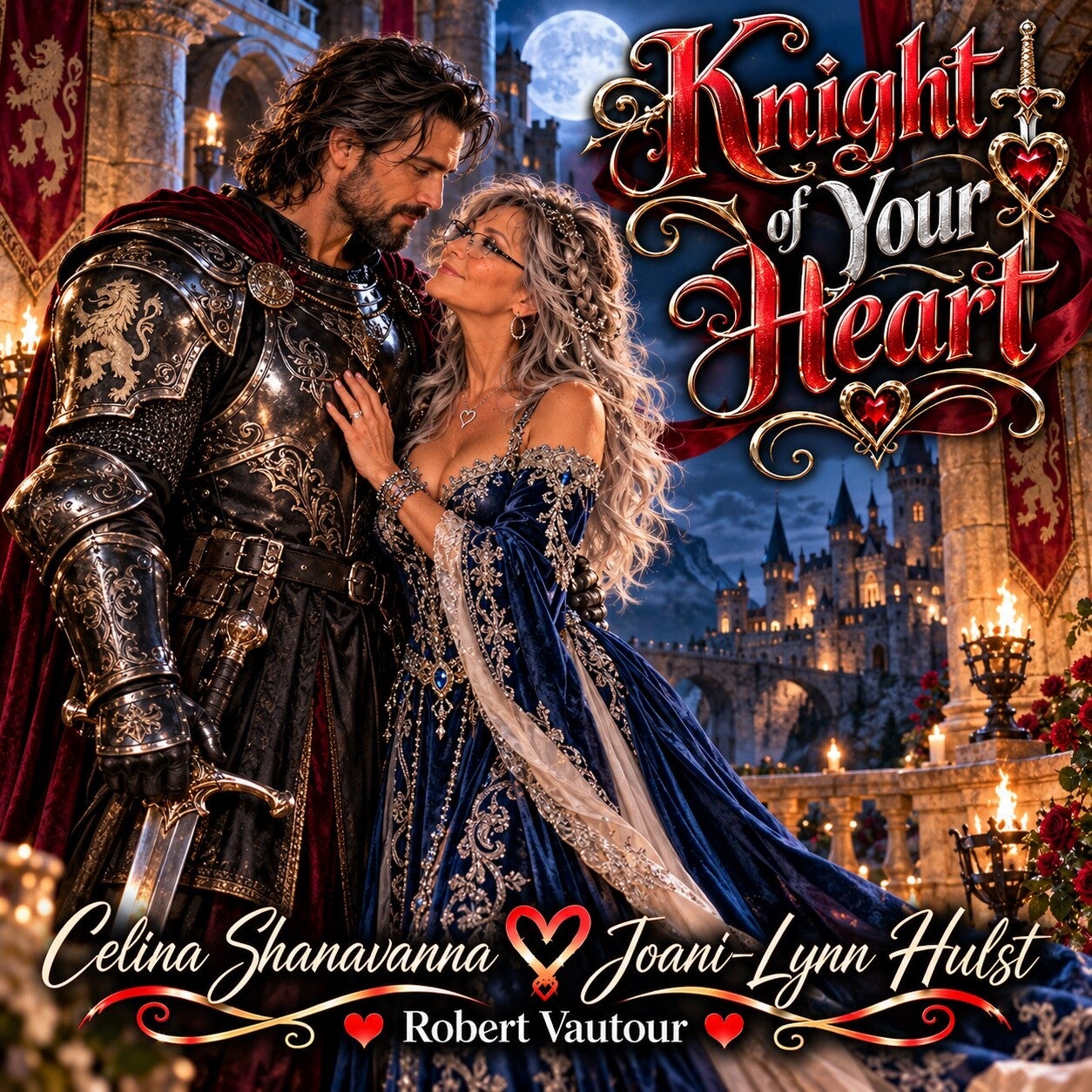
🎵 Listen to full song below
Theme:
Enduring Love, Chivalry, Quiet Courage, Mutual Respect, Loyalty, Emotional Strength, True Partnership, Love Beyond Fairy Tales, Inner Beauty, Personal Growth, Equality in Relationships, Unconditional Commitment, Shared Resilience, Choosing Each Other, and the Power of Love That Remains Through Life's Challenges.
Description: 4:57
A beautifully romantic, timeless, emotionally meaningful, and deeply symbolic song that uses the imagery of a medieval knight and a fair lady to explore what genuine, lasting love truly means.
Knight Of Your Heart begins with the atmosphere of an ancient legend, transporting the listener into a world of knights, courage, honour, battles, and romance. Yet beneath its fairy-tale setting lies a much more mature and realistic understanding of relationships.
This is not the traditional story of a powerful knight rescuing a helpless maiden.
It is not about a handsome hero winning a beautiful woman as a reward for bravery.
And it is not about two people falling in love and automatically living happily ever after.
Instead, the song reimagines the familiar knight-and-lady romance as a story about two strong, independent individuals who recognize each other's character, respect each other's strength, and choose to stand together through life's uncertainties.
The knight possesses courage, integrity, and devotion.
The lady possesses wisdom, independence, and emotional strength.
Neither is complete only because the other exists.
Neither needs to surrender their identity to experience love.
And neither is portrayed as superior.
Their relationship becomes meaningful because they recognize something valuable in one another.
The greatest love story is not necessarily about someone coming to rescue you. Sometimes it is about finding someone who respects your strength and chooses to stand beside you.
A knight whose greatest strength is his character
The song opens by introducing a knight who differs from the traditional heroic figure.
He is not described as the strongest warrior.
He is not the loudest man.
He does not seek attention or admiration.
Instead, his defining quality is quiet courage.
This is an important distinction.
Traditional stories often celebrate knights for their physical strength, victories, wealth, or reputation.
But this knight's worth comes from his willingness to stand firm when circumstances become difficult.
He demonstrates courage through his actions rather than through declarations about himself.
True courage is not always loud, dramatic, or impressive to an audience. Sometimes it is simply the determination to do what is right when doing so is difficult.
The knight's desire to become a better man adds another dimension to his character.
He is not presented as perfect.
He recognizes that personal growth is necessary.
He understands that honour involves more than appearing noble.
And he possesses an internal commitment to improving himself.
This makes him a more realistic romantic figure.
His strength is not based upon being flawless.
It comes from his willingness to learn, persevere, and remain accountable for the person he becomes.
The fair lady who is far more than beautiful
The introduction of the fair lady challenges another traditional fairy-tale expectation.
She is described as graceful and beautiful, but those qualities do not define her.
Beneath her outward appearance exists substantial inner strength.
She possesses wisdom.
She understands the realities of life.
And she recognizes that love cannot be measured solely through romantic promises.
The song establishes her as a woman with her own identity, judgment, and emotional depth.
Her beauty may attract attention, but her character is what makes her extraordinary.
This is especially important because traditional medieval romances often portray women primarily as objects of admiration.
The knight fights.
The lady waits.
The knight rescues.
The lady rewards him with affection.
But this song refuses that arrangement.
The lady is not merely someone waiting for a heroic man to change her circumstances.
She has already developed strength of her own.
She understands that appearances can be misleading.
And she knows that genuine love requires more than impressive words.
A woman who understands the difference between fantasy and reality
The lady's understanding of the world is one of the song's most significant qualities.
She has learned that life does not always resemble the romantic stories people are encouraged to believe.
Perhaps experience has taught her that beautiful promises do not always lead to beautiful outcomes.
Perhaps she has witnessed relationships in which appearances concealed disappointment.
Or perhaps she has simply developed the emotional maturity to recognize that genuine commitment requires consistent effort.
Whatever her experiences, she is no longer satisfied with the appearance of romance alone.
She is not searching for a man who can tell the most beautiful love story. She is looking for someone whose actions make that story believable.
This gives the lady an important sense of discernment.
She understands that love is not proven through titles, grand gestures, or declarations of devotion.
It is demonstrated through honesty.
Respect.
Consistency.
Reliability.
And the willingness to remain present when circumstances are difficult.
She wants something genuine rather than something that merely resembles a fairy tale.
Beyond the promise of a perfect ending
The song then establishes its central philosophy.
Love is not defined by a perfect ending.
It is defined by what two people create together.
Traditional fairy tales often conclude when the couple finally comes together.
The wedding occurs.
The kingdom celebrates.
And the story ends with the suggestion that happiness will continue indefinitely.
But real relationships do not stop at the moment two people choose each other.
That is where much of the meaningful work begins.
There are ordinary days.
Difficult conversations.
Disagreements.
Unexpected challenges.
Personal changes.
And circumstances that require patience and understanding.
A lasting relationship is not proven by how beautifully it begins, but by how two people continue treating each other after the beginning has become everyday life.
This transforms the song from a romantic fantasy into a reflection on enduring partnership.
The knight and lady are not simply falling in love.
They are learning what it means to sustain love.
Through the fire and the fight
The chorus introduces the imagery of fire, struggle, and perseverance.
These are familiar elements of medieval adventure, but they also function as metaphors for life's challenges.
Fire can represent hardship.
Battles can represent conflict or adversity.
Darkness can symbolize uncertainty.
And the journey can represent the passage of time.
The knight and lady face these experiences together.
Their bond becomes stronger not because they avoid every difficulty, but because they learn how to confront challenges as partners.
The strength of a relationship is not measured by the absence of hardship, but by the honesty, respect, and cooperation two people bring to the hardships they face.
The repeated emphasis on daily commitment is especially meaningful.
It suggests that lasting love is built through ordinary choices.
Showing consideration.
Keeping promises.
Communicating honestly.
Offering support.
Respecting boundaries.
And continuing to make room for each other's needs.
These actions may not sound as dramatic as defeating dragons or conquering kingdoms.
But they are the foundations upon which genuine trust develops.
A knight who fights for something greater than glory
The next verse returns to the knight's character.
He stands when shadows gather.
He perseveres when hope becomes uncertain.
And he does so without seeking recognition.
This reinforces the distinction between genuine courage and performative heroism.
The knight does not need an audience.
He does not require applause.
He is motivated by values that exist independently of public approval.
Honour is most meaningful when someone continues acting with integrity even when nobody is watching.
In the context of love, this becomes particularly significant.
The knight's devotion is not intended to impress the lady temporarily.
It is part of who he chooses to be.
He wants to become a better man because he values integrity.
And that commitment makes him capable of offering a more dependable relationship.
The woman who sees beyond the armour
One of the song's most beautiful images is the lady's ability to see beyond the knight's armour.
Armour traditionally symbolizes protection.
It shields the knight from physical danger.
But emotionally, armour can also represent the defenses people develop through difficult experiences.
Someone may appear confident while privately carrying insecurity.
They may seem strong while struggling with emotional exhaustion.
They may protect themselves through silence, independence, or emotional distance.
The lady recognizes that the knight is more than his outward appearance.
She sees the human being beneath the protective layers.
Real intimacy begins when someone recognizes the person behind the defenses rather than falling in love only with the image presented to the world.
She sees his perseverance.
His vulnerability.
His history.
And the quiet strength required to keep moving forward.
She does not admire him simply because he looks heroic.
She values the character he has demonstrated.
This creates an emotionally mature connection.
The knight is appreciated for who he genuinely is, not merely for the role he appears to fulfil.
A lady who does not need rescuing
The song makes an especially important declaration about the woman's independence.
She is not waiting helplessly for someone to save her.
She possesses strength in her own right.
She has her own courage.
Her own judgment.
Her own ability to face challenges.
And her own understanding of what she deserves.
This changes the traditional power dynamic of the knight-and-lady story.
The knight is not superior because he is physically powerful.
The lady is not inferior because she is graceful or feminine.
They possess different qualities that can complement one another without creating dependence.
A strong woman does not need to become weak in order to make room for a strong man.
And a genuinely confident man does not need a woman to be helpless in order to feel valuable.
This is one of the song's most empowering messages.
Love is not about establishing who possesses more power.
It is about recognizing that both people have something meaningful to contribute.
Two complete individuals choosing partnership
The song then reaches one of its most important ideas.
The knight and lady become something greater together, but not because either person was incomplete before the relationship.
This distinction is essential.
Romantic stories sometimes suggest that people are merely halves waiting to find someone who will make them whole.
But this song offers a healthier perspective.
The knight already possesses his own identity.
The lady already possesses hers.
Their relationship does not erase those identities.
Instead, it allows them to create something shared.
The strongest partnerships are not built by two people losing themselves in each other, but by two individuals bringing their authentic selves into a relationship they freely choose.
They can support one another.
Learn from one another.
Celebrate each other's accomplishments.
And offer strength during difficult periods.
But their love does not require either person to surrender independence.
This is what makes the relationship a partnership rather than a rescue story.
Love as a daily decision
The second chorus emphasizes that the couple remains together because they choose to face life's challenges.
This introduces the idea of commitment as an ongoing action.
Love may begin with attraction.
It may deepen through emotional connection.
But lasting relationships also require choices.
The choice to communicate.
The choice to listen.
The choice to remain honest.
The choice to respect differences.
And the choice to continue investing in the relationship.
Love is not sustained by one beautiful promise made at the beginning. It is strengthened through the many smaller promises honoured along the way.
The song does not suggest that remaining together should happen regardless of circumstances.
Healthy commitment still requires mutual respect, emotional safety, and accountability.
Rather, it celebrates two people who continue choosing each other because their relationship remains meaningful and worthwhile.
The true meaning of standing beside someone
The bridge shifts attention away from victories and public recognition.
It asks the listener to consider who remains beside them when life becomes difficult.
This is the emotional centre of the song.
The knight's worth is not determined by how many battles he wins.
The lady's worth is not measured by how much admiration she receives.
Their relationship is not validated by public approval.
What matters is their willingness to support one another.
The person who stands beside you through life's ordinary difficulties may offer something far more valuable than someone who makes extraordinary promises but disappears when those promises become inconvenient.
The song celebrates reliability.
Not perfection.
Not endless sacrifice.
Not dramatic declarations.
But genuine companionship.
The knowledge that someone cares enough to remain engaged, communicate honestly, and face challenges together.
No crown, no throne
The brief declaration that the couple needs neither a crown nor a throne is one of the song's most effective symbolic moments.
Crowns represent status.
Thrones represent power.
Kingdoms represent wealth and influence.
Yet the couple's happiness does not depend upon possessing any of these things.
They do not need public recognition.
They do not need an impressive title.
They do not need to become legendary figures.
Their relationship has value because of what exists between them.
The greatest treasure in this story is not a kingdom to rule, but a relationship in which both people feel respected, valued, and genuinely accompanied.
This gives the medieval imagery a beautiful reversal.
The knight and lady may inhabit a world associated with royalty and grandeur.
But the song's message is that love itself does not require grandeur.
It requires authenticity.
The private moments that make a love story
The later verses suggest that future generations might tell the couple's story as a legend.
But the narrator recognizes that the true meaning of their relationship exists in moments outsiders may never know.
This is a particularly touching observation.
Public stories often celebrate dramatic events.
Heroic victories.
Great sacrifices.
Extraordinary achievements.
But intimate relationships are also shaped by experiences that never receive public attention.
A reassuring conversation.
A quiet embrace.
A moment of shared laughter.
An apology offered sincerely.
A difficult day made easier through kindness.
Or simply the comfort of knowing that someone understands.
The most meaningful chapters of a love story are often the ones nobody else ever gets to read.
These private moments form the emotional foundation of the knight and lady's relationship.
Their bond is not sustained by reputation.
It is sustained by the connection they experience when nobody else is present.
When everything else fades
The song imagines a time when glory, titles, and public recognition lose their importance.
This introduces the passage of time.
Physical beauty may change.
Strength may diminish.
Circumstances may shift.
And accomplishments that once seemed important may become distant memories.
But genuine affection can remain meaningful through those changes.
The knight and lady's relationship is not dependent upon remaining exactly as they were when they first met.
They are allowed to grow.
To change.
To become older.
And to experience different stages of life.
Enduring love makes room for the people we become, rather than demanding that we remain permanently frozen in the moment when the relationship began.
The song celebrates a bond capable of adapting to life's changes.
Not because change is always easy.
But because both individuals value the relationship enough to continue approaching one another with care.
The strongest love is the one that stays
The final chorus returns to the central message of commitment.
The knight and lady's love is not merely a beautiful story.
It is something demonstrated through their willingness to remain present.
This is the culmination of everything the song has established.
The knight's courage.
The lady's independence.
Their mutual respect.
Their shared resilience.
And their commitment to facing life together.
All lead toward the understanding that genuine love is revealed through consistency.
The strongest kind of love is not necessarily the loudest, most dramatic, or most publicly celebrated. It is often the love that continues showing up through the ordinary realities of life.
The idea of not walking away is best understood here as a celebration of faithful, respectful commitment—not as an obligation to remain in a harmful relationship.
The knight and lady stay because they continue choosing a bond that honours both of them.
Their loyalty is mutual.
Their strength is shared.
And their relationship is built upon something deeper than appearances.
Not a fairy tale—something real
The final declaration is the perfect conclusion.
After all the medieval imagery, romantic symbolism, and references to legendary love, the song rejects the idea that this relationship is merely a fairy tale.
It is something real.
This changes how the entire song should be understood.
The knight and lady are not meant to represent an impossible romantic fantasy.
They represent qualities that can exist within genuine human relationships.
Courage.
Honesty.
Emotional maturity.
Respect.
Independence.
Loyalty.
And the willingness to build a life together.
Real love does not need to resemble a fairy tale to be extraordinary. Its beauty often comes from the fact that two imperfect people continue treating each other with care through an imperfect world.
The song begins like a legend.
But it ends as a statement about the kind of relationship worth creating in real life.
The deeper meaning
Ultimately, Knight Of Your Heart is about redefining romantic heroism through the values of integrity, mutual respect, emotional strength, independence, and the consistent commitment of two people who choose to face life together.
It challenges traditional romantic expectations.
The man does not have to be invincible.
The woman does not have to be helpless.
Neither person needs to be perfect.
And love does not require an extraordinary public story to possess extraordinary meaning.
The knight's greatest quality is not his ability to defeat enemies.
It is his character.
The lady's greatest quality is not her beauty.
It is her wisdom and strength.
And their greatest achievement is not winning a kingdom.
It is creating a relationship in which both individuals can remain themselves.
He does not become her hero by taking away her strength. He becomes worthy of her love by respecting it.
She does not become his greatest treasure by waiting to be rescued. She becomes his partner by recognizing the man beneath the armour and standing beside him as an equal.
This is what makes the song particularly meaningful.
It celebrates romance without glorifying dependence.
It honours devotion without suggesting that love requires the surrender of individuality.
And it recognizes that genuine partnership involves two people who are capable of standing on their own but freely choose to walk together.
The medieval setting gives the song a timeless quality.
Yet its message is remarkably contemporary.
A healthy relationship is not about control.
It is not about one person possessing the other.
It is not about appearances, social status, or grand declarations.
It is about how two people treat each other.
Especially when life becomes difficult.
Perhaps the song's most beautiful message is this:
I do not need you to rescue me from my life.
I do not need you to become someone you are not.
I do not need promises of castles, kingdoms, or perfect endings.
I need honesty, courage, respect, and someone who understands that love is something we create together.
Stand beside me, not above me.
Respect my strength, and I will respect yours.
Let us face the world as two individuals who choose each other without losing ourselves.
That is the relationship this song celebrates.
Not a perfect knight.
Not a helpless lady.
Not an imaginary world without hardship.
But two people whose strength becomes even more meaningful when shared.
A beautifully symbolic, romantic, and empowering song that transforms the traditional knight-and-lady legend into a celebration of equal partnership, genuine character, quiet courage, and enduring love built through everyday choices rather than fairy-tale promises.
And its final truth is especially powerful:
The greatest knight is not the man who wins every battle.
The greatest lady is not the woman who waits to be saved.
The greatest love story is the one in which two strong people recognize each other's worth and continue choosing to stand together.
No crown.
No throne.
No perfect fairy tale.
Just two people. Two hearts. Mutual respect. And something real.