Whole on Her Own - Mp3
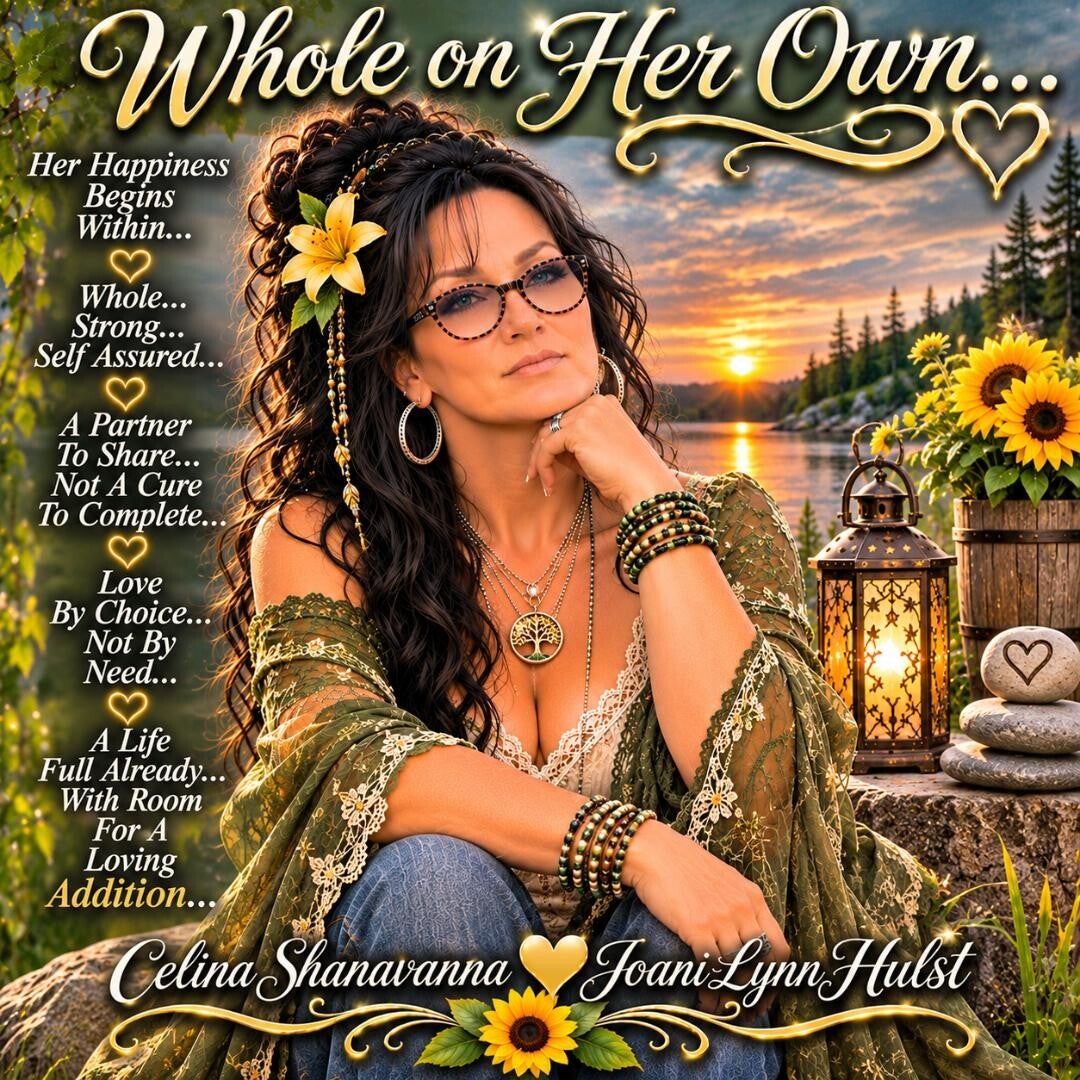
🎵 Listen to full song below
Theme:
Self-Love, Emotional Independence, Inner Peace, Self-Worth, Personal Fulfillment, Healthy Romantic Relationships, Authenticity, Mutual Respect, Freedom, Emotional Maturity, and Choosing Love Without Losing Yourself.
Description: 5:00
A beautifully empowering, deeply heartfelt, emotionally mature, and inspiring song about a woman who has discovered that genuine happiness begins within herself and that romantic love, while potentially wonderful and meaningful, is not a requirement for her to feel complete.
Through gentle reflections on personal growth, independence, emotional security, self-respect, and the possibility of a healthy romantic partnership, the song celebrates a woman who has reached an important realization: she does not need a man to create her happiness, establish her worth, or give her life meaning.
She has already begun creating those things for herself.
The song opens by describing a quiet, steady happiness that originates within her soul.
This happiness is not dependent upon attention, admiration, romantic affection, or the approval of others.
It does not require constant excitement or dramatic demonstrations of joy.
Instead, it is rooted in knowing herself, understanding her values, recognizing her emotional needs, and appreciating the life she is building.
Her peace is no longer something she searches for in another person's presence. It is something she has learned to carry within herself.
One of the song's most meaningful messages is the distinction between wanting a romantic relationship and needing one to feel complete.
The woman is not rejecting love, companionship, intimacy, affection, or the possibility of sharing her future with someone special.
She welcomes the idea of a loving man entering her life.
She can imagine the warmth of shared laughter, the tenderness of a gentle kiss, the comfort of companionship, and the happiness of building meaningful memories together.
But she understands that these experiences would enrich an already meaningful life rather than rescue her from an empty one.
A man may contribute to her happiness, but he does not own it, control it, or determine whether she is entitled to experience it.
This distinction becomes the foundation of her emotional independence.
The lyrics suggest that she has learned important lessons about the difference between genuine connection and relationships built around emotional dependency.
She no longer wants to be rescued, nor does she want to become responsible for rescuing someone else.
Instead, she desires a partnership in which both individuals take responsibility for their own emotional well-being while offering each other affection, encouragement, understanding, and support.
The song beautifully expresses this through the image of two steady lives choosing to come together.
Rather than clinging to one another out of fear, loneliness, insecurity, or desperation, they would walk beside each other because they genuinely enjoy sharing their lives.
Healthy love is not two incomplete people desperately trying to become whole through each other. It is two individuals choosing to create something meaningful together while maintaining their identities.
Another particularly touching element is the description of the kind of man she would welcome.
She is not searching for someone who needs to dominate, control, impress, or compete with her.
She wants someone emotionally secure enough to appreciate her strength, intelligence, humour, independence, and depth of character.
A man who listens thoughtfully, communicates honestly, respects her individuality, and does not feel threatened by her ability to stand on her own.
Someone whose affection is demonstrated through consistent behaviour rather than grand promises.
The song suggests that the right partner would recognize her independence as something to admire rather than something to weaken.
He would not need her to become smaller so he could feel important. He would be secure enough to stand beside her as an equal.
The emphasis on mutual respect is especially meaningful.
The relationship she envisions would not be built upon rigid expectations, emotional manipulation, possessiveness, or the belief that one partner must sacrifice personal freedom to prove devotion.
Instead, it would grow through daily choices, trust, shared experiences, emotional honesty, and a willingness to support each other's individuality.
Love would be something both people freely offer rather than something either person feels obligated to surrender themselves to maintain.
The song also celebrates the woman's personality and the qualities that make her unique.
She is playful, kind, thoughtful, affectionate, and generous.
She enjoys laughter, offers warmth, and possesses a genuine capacity for caring deeply about others.
Yet her kindness no longer means ignoring her own needs.
She understands that generosity must coexist with boundaries and that compassion does not require unlimited self-sacrifice.
She can have a giving heart without giving away the parts of herself that deserve protection.
This represents an important form of emotional maturity.
She has learned that being loving does not mean being endlessly available, and being understanding does not mean accepting behaviour that damages her well-being.
Her strength is not necessarily loud, confrontational, or demanding.
It is reflected in her ability to remain grounded, recognize her limits, and make decisions that honour both her values and her emotional health.
Another powerful aspect of the song is its refusal to make romantic love the starting point of her life.
She is not waiting for a relationship before pursuing happiness.
She is not postponing experiences, dreams, friendships, personal interests, or opportunities until someone arrives to share them.
Her life is already underway.
She has her own identity, her own interests, her own sense of purpose, and her own reasons to look forward to tomorrow.
A relationship may become a beautiful part of that journey, but it will not determine whether the journey is worth taking.
She is not waiting for someone to give her permission to begin living. She has already begun.
The song also challenges the idea that a woman who is happy alone must be uninterested in companionship.
Independence and romantic openness are not opposites.
A person can genuinely enjoy their own company while still appreciating the possibility of sharing their life with someone.
They can value freedom without fearing commitment.
They can desire affection without becoming dependent upon it.
And they can choose a partner without surrendering their identity.
The woman in this song embodies that balance.
She is neither emotionally closed nor desperately searching.
She is open to love, but she is no longer willing to sacrifice her peace simply to have it.
One of the song's most empowering realizations is that being single is not evidence of incompleteness, and being in a relationship is not automatic proof of happiness.
A meaningful life can exist with or without romantic partnership.
What matters is whether the woman feels connected to herself, respected in her relationships, and free to live according to her own values.
If a loving man eventually joins her, she wants the relationship to be an expression of mutual affection rather than a solution to loneliness or insecurity.
If that relationship does not appear, her life still retains its beauty, purpose, and value.
The final verses bring the song's message into particularly clear focus.
She stands complete within herself, yet remains open to sharing her life.
Her independence has not destroyed her capacity for tenderness.
Her experiences have not eliminated her desire for companionship.
And her self-respect has not made her unwilling to compromise in healthy, mutually respectful ways.
Instead, she has learned that the most meaningful love is one she can freely choose without feeling that her identity or happiness depends upon keeping it.
Ultimately, it is about a woman who has discovered the freedom of being emotionally whole within herself while remaining open to a loving, equal, and fulfilling partnership that complements rather than controls her life.
A tender and empowering reminder that a woman's happiness does not begin when a man chooses her, her worth does not increase because someone loves her, and her life does not remain unfinished simply because she is walking through it independently.
She can be affectionate without being dependent.
She can be generous without sacrificing herself.
She can be strong without becoming emotionally hardened.
She can enjoy solitude without being lonely.
And she can welcome love without needing it to establish her value.
She wants a man who adds laughter to her days, tenderness to her evenings, companionship to her adventures, and genuine affection to the life she already loves.
But she does not want someone who believes that loving her gives him authority over her happiness, choices, identity, or independence.
Perhaps the most beautiful message within the song is this:
She is not searching for someone to complete her. She is open to someone who appreciates that she is already complete.
Her heart remains warm. Her spirit remains playful. Her capacity for love remains strong.
But her peace is no longer negotiable.
She has learned to be her own source of happiness, her own foundation of strength, and the author of her own life.
And if the right man comes along, he will not find a woman waiting to be rescued.
He will find a woman already living, laughing, growing, and enjoying her freedom—who may simply decide that sharing some of that happiness with him would make an already beautiful life even sweeter.
She is whole on her own. Not closed to love, not afraid of companionship, and not waiting to be completed.
She is already enough. And any love she chooses must honour the woman she has become.