Autocorrect Duck Duck Duck - Mp3
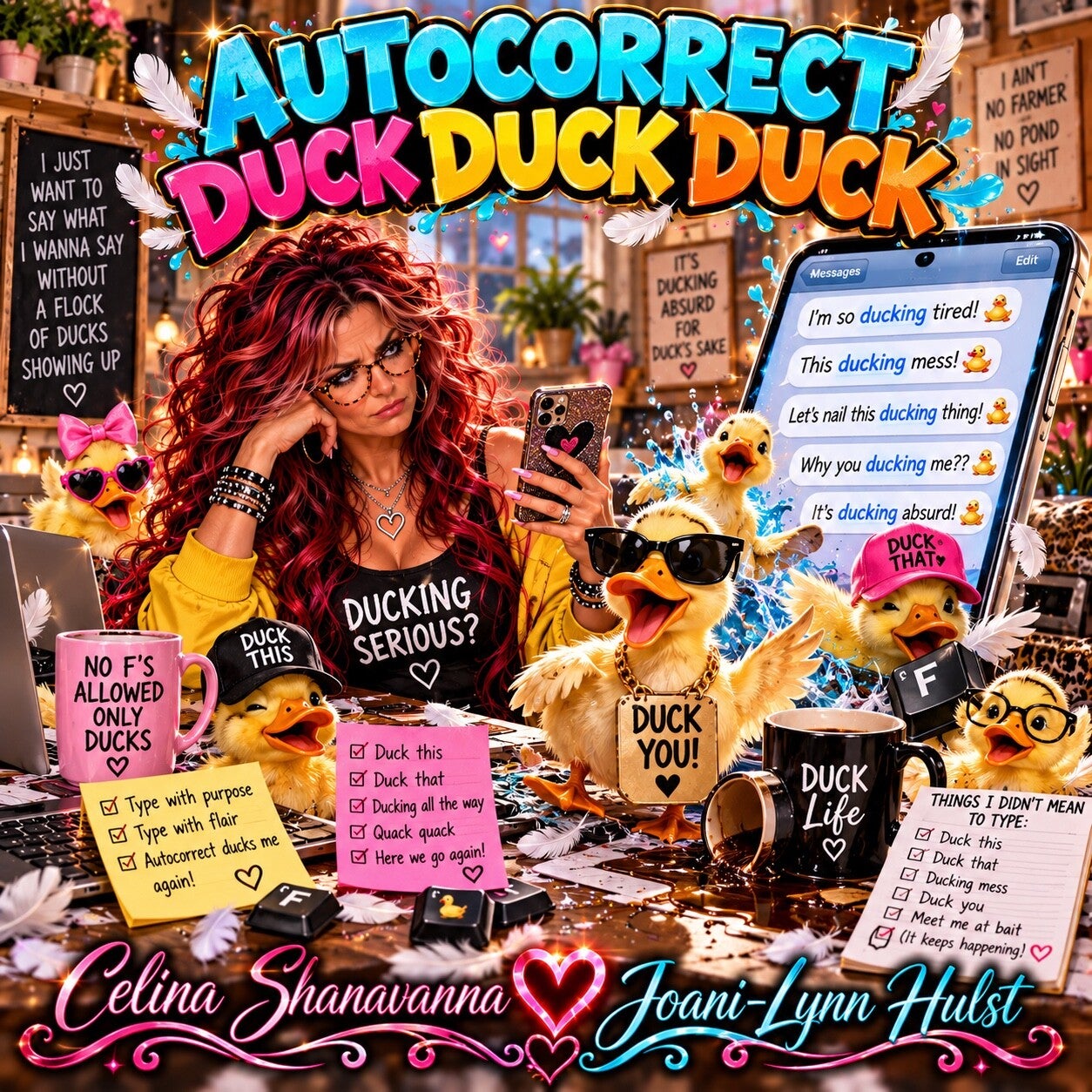
🎵 Listen to full song below
Theme:
Autocorrect Fails, Technology Frustrations, Hilarious Texting Mistakes, Unwanted Censorship, Wordplay and Double Meanings, Everyday Annoyances, Smartphone Mishaps, Comedic Miscommunication, Digital Communication, Sarcasm, Exaggeration, Playful Profanity, Duck Puns, Laughing at Frustration, and the Absurdity of Modern Technology.
Description: 4:05
Autocorrect Duck Duck Duck is a hilarious, cheeky, sarcastic, fast-paced, and delightfully ridiculous comedy song about the frustrations of smartphone autocorrect, particularly its tendency to replace a certain four-letter swear word with the considerably more innocent word duck.
The song transforms an everyday technological annoyance into an increasingly outrageous battle between a frustrated texter and a keyboard that seems determined to turn every expression of irritation into a bird-related conversation.
The narrator simply wants to communicate freely.
They want to vent.
Complain.
Express frustration.
And occasionally use some colourful language.
But their phone has other ideas.
Instead of allowing the intended words to appear, autocorrect repeatedly substitutes ducks, ducking, and other feathered variations.
What begins as a minor inconvenience quickly develops into an absurd invasion of the narrator's messages.
Friends become confused.
Ordinary conversations turn into bird-related nonsense.
Workplace communication becomes embarrassing.
And the narrator begins feeling as though their keyboard has developed a personal vendetta against them.
One of the song's greatest comedic strengths is its use of escalating absurdity.
The narrator begins by complaining about a few unwanted corrections.
But soon the ducks seem to be everywhere.
They invade conversations.
Take over messages.
Interfere with work.
And eventually dominate the entire song.
The lyrics are filled with playful references to quacking, waddling, mallards, ponds, feathers, farmers, and the childhood game Duck, Duck, Goose.
These images turn the repeated autocorrect mistake into a complete comedic universe.
The narrator's frustration becomes increasingly dramatic, but the exaggeration is deliberately humorous.
The song also uses sarcasm to mock technology that supposedly makes communication easier while repeatedly interfering with what the user actually wants to say.
The central message is that technology designed to help us communicate can sometimes create the most ridiculous misunderstandings, and even the smallest everyday frustrations can become a source of laughter.
Its tone is playful, mischievous, sarcastic, exaggerated, irreverent, energetic, absurd, and thoroughly entertaining.
The deeper meaning
Although Autocorrect Duck Duck Duck is primarily a comedy song, it contains several recognizable observations about technology, communication, frustration, and the humorous side of everyday life.
1. The title immediately establishes the joke
Autocorrect Duck Duck Duck is a memorable title because it uses repetition to emphasize the narrator's central frustration.
The repeated word duck represents the unwanted correction that refuses to disappear.
It also creates an immediate association with the familiar childhood game Duck, Duck, Goose.
The deeper comedic meaning is that one ridiculous word has become so persistent that it practically takes over the narrator's entire vocabulary.
The title is intentionally repetitive because the autocorrect problem is repetitive.
2. The phone becomes a character with a personality of its own
The song opens:
“My phone's got a mind of its own today”
This is the foundation of the song's humour.
The narrator treats the phone as though it possesses independent thoughts and intentions.
Instead of being a passive device, it becomes an uncooperative character.
The humour comes from personifying technology as a stubborn opponent that deliberately refuses to cooperate.
The narrator is no longer simply correcting mistakes.
They are fighting their own phone.
3. The song relies on a familiar and instantly recognizable autocorrect joke
The narrator explains:
“A word that rhymes with truck
But hey no luck”
This is a clever way of establishing the intended profanity without actually saying it.
The listener immediately understands the joke.
The rhyme creates anticipation.
And the following references to ducks complete the punchline.
The comedic strength comes from allowing the audience to mentally supply the missing word.
Sometimes the joke is funnier because the word remains unsaid.
4. The keyboard becomes an opponent in an unwinnable battle
The narrator declares:
“My thumbs are fighting but they never win”
This is a particularly funny image.
The narrator's thumbs are described as though they are soldiers battling an enemy.
The enemy is autocorrect.
And despite repeated attempts, the thumbs keep losing.
The humour comes from exaggerating an ordinary typing inconvenience into an ongoing war between a person and their phone.
5. Autocorrect becomes an unwanted guardian of politeness
The chorus announces:
“Autocorrect thinks I'm polite hooray”
This is one of the song's strongest sarcastic lines.
The narrator is clearly irritated.
They want to express themselves with profanity.
But their phone keeps making them appear more polite than intended.
The word hooray is deliberately sarcastic.
The deeper joke is that technology is imposing a version of the narrator's personality that does not match what they are actually feeling.
6. Repetition turns one mistake into a ridiculous invasion
The narrator complains:
“Twelve ducks a day and they won't fly away”
The number adds comic exaggeration.
The ducks are no longer occasional mistakes.
They have become a daily infestation.
And the phrase won't fly away extends the bird metaphor.
The humour comes from treating unwanted words as actual ducks that have settled into the narrator's phone and refuse to leave.
7. An ordinary complaint becomes a bird-related misunderstanding
The narrator explains:
“Life's a ducking mess is what I conveyed
Now she thinks I joined a bird parade”
This is one of the song's funniest examples of miscommunication.
The narrator is trying to complain about having a terrible day.
Instead, the message sounds like an enthusiastic announcement about ducks.
The imagined friend's interpretation takes the joke even further.
The humour comes from the enormous difference between the narrator's intended emotional message and the ridiculous message autocorrect produces.
8. The narrator insists they have no connection to ducks whatsoever
The lyrics declare:
“I ain't no farmer no pond in sight
Yet my texts are feathered day and night”
This is excellent visual comedy.
The narrator emphasizes that they are not involved in farming, birdwatching, or anything remotely connected to ducks.
Yet their messages suggest otherwise.
The comedic effect comes from the absurd mismatch between the narrator's actual life and the duck-filled identity their phone has created.
9. The song turns frustration into a question of personal expression
The narrator asks:
“I just wanna cuss is that alright?”
This is a funny but recognizable complaint.
The narrator is not asking for anything complicated.
They simply want to type the words they choose.
The underlying observation is that automated corrections can sometimes interfere with a person's intended tone, personality, and freedom of expression.
The song exaggerates that frustration for comedic effect.
10. The narrator's artistic pride makes the corrections even funnier
The lyrics declare:
“My words are poetry but it doesn't care”
This is a particularly amusing moment.
The narrator presents themselves as someone carefully choosing expressive, meaningful words.
But autocorrect has no appreciation for their supposed literary brilliance.
It simply keeps replacing words.
The humour comes from contrasting the narrator's dramatic artistic self-image with the ridiculous simplicity of the keyboard's behaviour.
11. The childhood game becomes part of the chaos
The narrator sings:
“Duck duck goose it's loose it's loose”
This is a playful use of a familiar phrase.
The childhood game becomes a musical expression of the narrator's frustration.
The repetition adds rhythm and creates a chant-like quality.
The comedic meaning is that the narrator's adult frustration has become so ridiculous that it resembles a children's game.
This also makes the phrase memorable as a recurring hook.
12. The workplace scenes increase the embarrassment
The narrator describes:
“Let's nail this ducking thing I wrote”
This scene introduces professional consequences to the joke.
The narrator is trying to send a work-related message.
But autocorrect inserts the familiar duck substitution.
The message becomes unintentionally silly.
The humour comes from bringing the narrator's increasingly absurd duck problem into an environment where they are supposed to sound professional.
13. The narrator becomes an unwilling bird enthusiast
The lyrics declare:
“Now I'm the office bird loving goat”
This is intentionally ridiculous.
The narrator imagines that coworkers now associate them with birds rather than their intended message.
The phrase bird loving goat adds another animal to the already chaotic situation.
The comedic effect comes from the narrator's exaggerated fear that autocorrect is creating an entirely false public identity.
14. Autocorrect begins changing ordinary words into new jokes
The narrator describes:
“Lazy meet me at eight becomes
Meet me at bait”
This extends the humour beyond the original duck substitution.
Now the phone is altering ordinary communication in other absurd ways.
The change from eight to bait fits the developing bird-and-pond imagery.
The deeper joke is that once autocorrect starts interfering, even the simplest arrangements can become ridiculous.
15. The narrator becomes convinced the phone is deliberately targeting them
The repeated question is:
“Why you ducking me
Why you ducking me”
This is one of the song's strongest double meanings.
The phrase sounds like an accusation directed at the phone.
It also allows the listener to hear the intended profanity behind the substitution.
The humour comes from turning a common autocorrect mistake into what sounds like a personal betrayal.
The narrator treats the phone as though it is intentionally provoking them.
16. Anger itself becomes part of the absurdity
The narrator declares:
“Takes my rage turns it to a bird”
This is one of the most creative descriptions in the song.
The narrator's anger is transformed into something harmless and ridiculous.
Instead of expressing fury, the phone produces a duck.
The comedic meaning is that autocorrect has somehow managed to convert emotional intensity into poultry.
The contrast between rage and a duck is what makes the line funny.
17. The missing letter becomes the ultimate enemy
The narrator complains:
“No F's allowed no way no how”
This is a clever way of continuing the profanity joke.
The narrator makes it sound as though the keyboard has banned a particular letter.
The frustration is exaggerated into a form of technological censorship.
The humour comes from imagining that the phone has established its own ridiculous rules about what the narrator is permitted to type.
18. The ending deliberately refuses to resolve the problem
The song closes with:
“Duck duck duck it's profound
Why's this bird always hanging around”
This is a fitting comedic ending.
The narrator has complained repeatedly.
They have tried to explain themselves.
They have become increasingly frustrated.
Yet the duck remains.
The final joke is that despite everything, autocorrect has apparently won.
The narrator is still trapped in the same ridiculous situation.
And the audience is left with the recurring image of a duck that simply refuses to disappear.
The central message
Autocorrect Duck Duck Duck is about the ridiculous frustration of trying to communicate naturally while technology repeatedly changes what you actually mean to say.
The song uses a familiar smartphone annoyance to create an exaggerated comedy about miscommunication.
The narrator wants to express frustration using colourful language.
But autocorrect repeatedly replaces the intended words with duck-related alternatives.
As the song progresses, the problem becomes increasingly absurd.
Friends misunderstand messages.
Workplace communication becomes embarrassing.
Ordinary words turn into bird references.
And the narrator begins treating their keyboard as an enemy.
The song is not intended to deliver a serious warning about technology.
Its primary purpose is entertainment.
However, beneath the humour is a recognizable observation about modern communication.
Technology can be helpful, but it can also create ridiculous misunderstandings when automated corrections interfere with what someone actually intends to say.
This is why HUMOR & SARCASM is unquestionably the strongest primary category.
The entire composition is built around wordplay, double meanings, exaggerated frustration, and absurd situations.
Its secondary connection to LIFE LESSONS, WISDOM & PERSONAL GROWTH is lighthearted rather than deeply philosophical: everyday annoyances can sometimes become entertaining stories when viewed through humour.
What makes this song particularly meaningful
What makes Autocorrect Duck Duck Duck stand out is its relentless commitment to one central joke.
The entire composition revolves around a single autocorrect substitution.
But instead of repeating the same punchline without variation, the lyrics continually develop new situations around it.
The narrator's phone becomes an opponent.
The ducks become an invasion.
Text messages become bird-related nonsense.
Workplace conversations become embarrassing.
And the narrator's frustration becomes increasingly theatrical.
The song also uses several different types of comedy.
Wordplay: The repeated substitution of duck for the intended profanity.
Sarcasm: The narrator's exaggerated appreciation for autocorrect's unwanted politeness.
Personification: The phone behaves like a stubborn character with its own agenda.
Absurdity: Ordinary text messages transform into imaginary duck parades and barnyard scenes.
Repetition: The recurring duck phrases become musical hooks.
Escalation: Each new verse makes the situation more ridiculous.
Another particularly entertaining feature is the way the lyrics repeatedly allow the listener to hear the intended profanity without actually including it.
The audience understands exactly what the narrator wants to say.
That shared understanding becomes part of the joke.
The song's strongest quality is its relatability.
Many people have experienced an autocorrect mistake that completely changed the meaning of a message.
This composition takes that familiar annoyance and pushes it to an outrageous extreme.
What makes the song especially funny is that the narrator becomes increasingly furious while the actual problem remains hilariously harmless: a keyboard that simply will not stop talking about ducks.
The deepest meaning
Unlike the more emotionally serious songs about addiction, healing, or personal struggles, Autocorrect Duck Duck Duck is designed primarily to entertain.
Its deeper meaning is found in the humour of everyday frustration.
The narrator wants something simple.
To type a message.
To express themselves.
And to have their words appear as intended.
But their phone keeps interfering.
The more irritated they become, the more ridiculous the situation gets.
And the more ridiculous it gets, the funnier the song becomes.
The composition captures a recognizable contradiction of modern technology.
Devices designed to make life easier can sometimes create entirely new frustrations.
But the song also demonstrates how an ordinary annoyance can become a source of creativity.
A single unwanted autocorrect substitution becomes an entire musical comedy filled with wordplay, sarcasm, exaggerated anger, and increasingly absurd bird imagery.
The song's most memorable declaration is:
“I just wanna curse but it ducks my will”
That line captures the entire conflict.
The narrator wants to express frustration.
The phone refuses to cooperate.
And the result is comedy.
The deepest meaning of Autocorrect Duck Duck Duck is that sometimes the most entertaining songs come from the smallest, silliest frustrations of everyday life.
And perhaps its greatest comedic lesson is this:
When life gives you lemons, make lemonade. But when autocorrect gives you ducks, apparently you make an entire ducking song about it!